
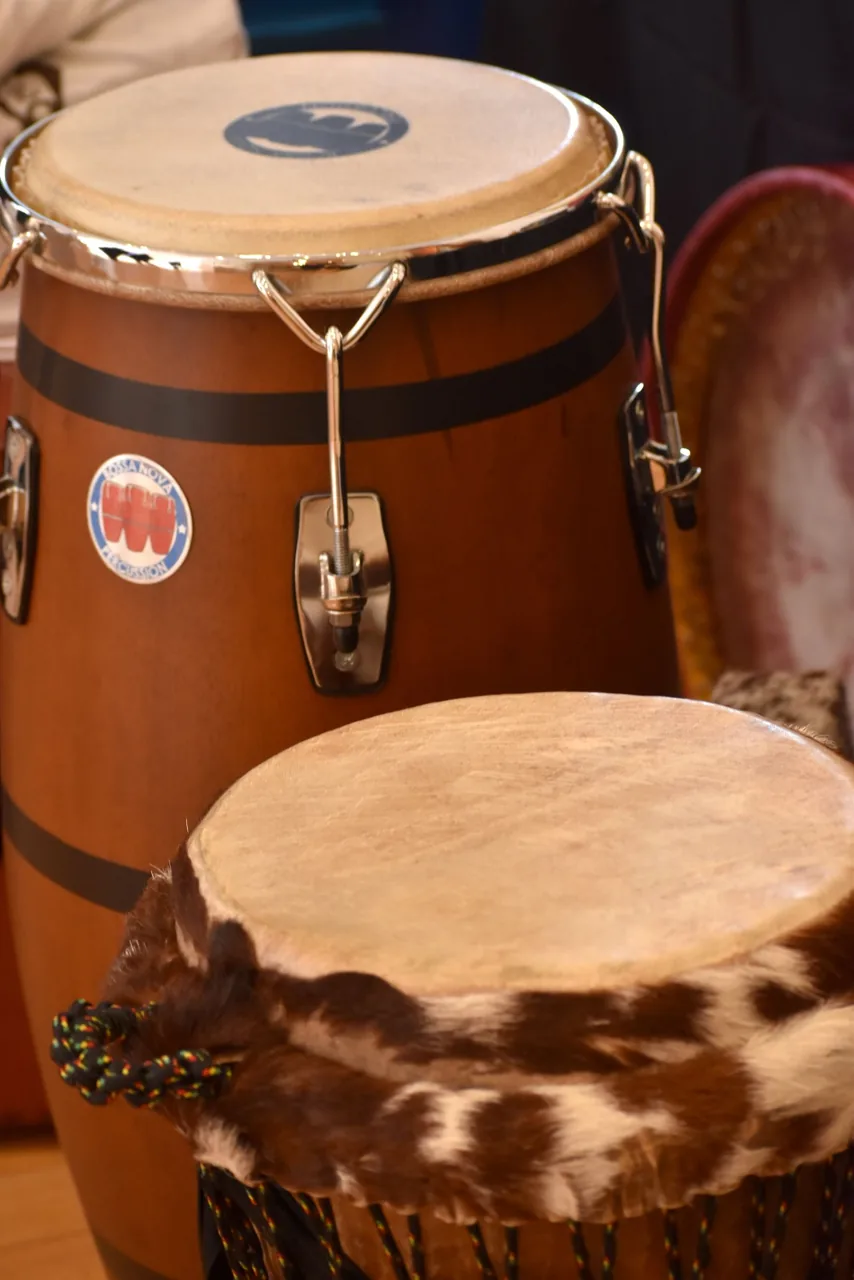
Strip salsa back far enough and you reach a place with no brass, no piano, no dance-hall polish — just voices, clave and the deep conversation of hand drums. That place is rumba, and spending time with it changes how a salsa dancer feels every track that came after.
Cuban rumba is a family of styles born in the yards and streets, not the concert halls. It is built from percussion and call-and-response singing, with dancers responding to the drums in a way that is playful, earthy and often improvised. There is no big band to carry you; the groove is entirely in the drums and the bodies moving to them.
What rumba teaches, even to someone who never intends to dance it seriously, is patience with a groove. Salsa's brass can seduce you into chasing every accent; rumba slows you down and puts you back in the pocket, listening to the conversation between the drums rather than riding the melody on top.
You can hear its fingerprints all over modern salsa — in the tumbao, in the way the best dancers sink into a song rather than skate across it, in the call-and-response of the chorus. The polish came later; the pulse was there from the beginning, and it never really left.
For a dancer, a little time with rumba is grounding in the literal sense. It sends you back to the salsa floor moving lower, listening deeper, and trusting the groove to carry you instead of trying to fill every bar. The oldest root turns out to be the most useful one.