
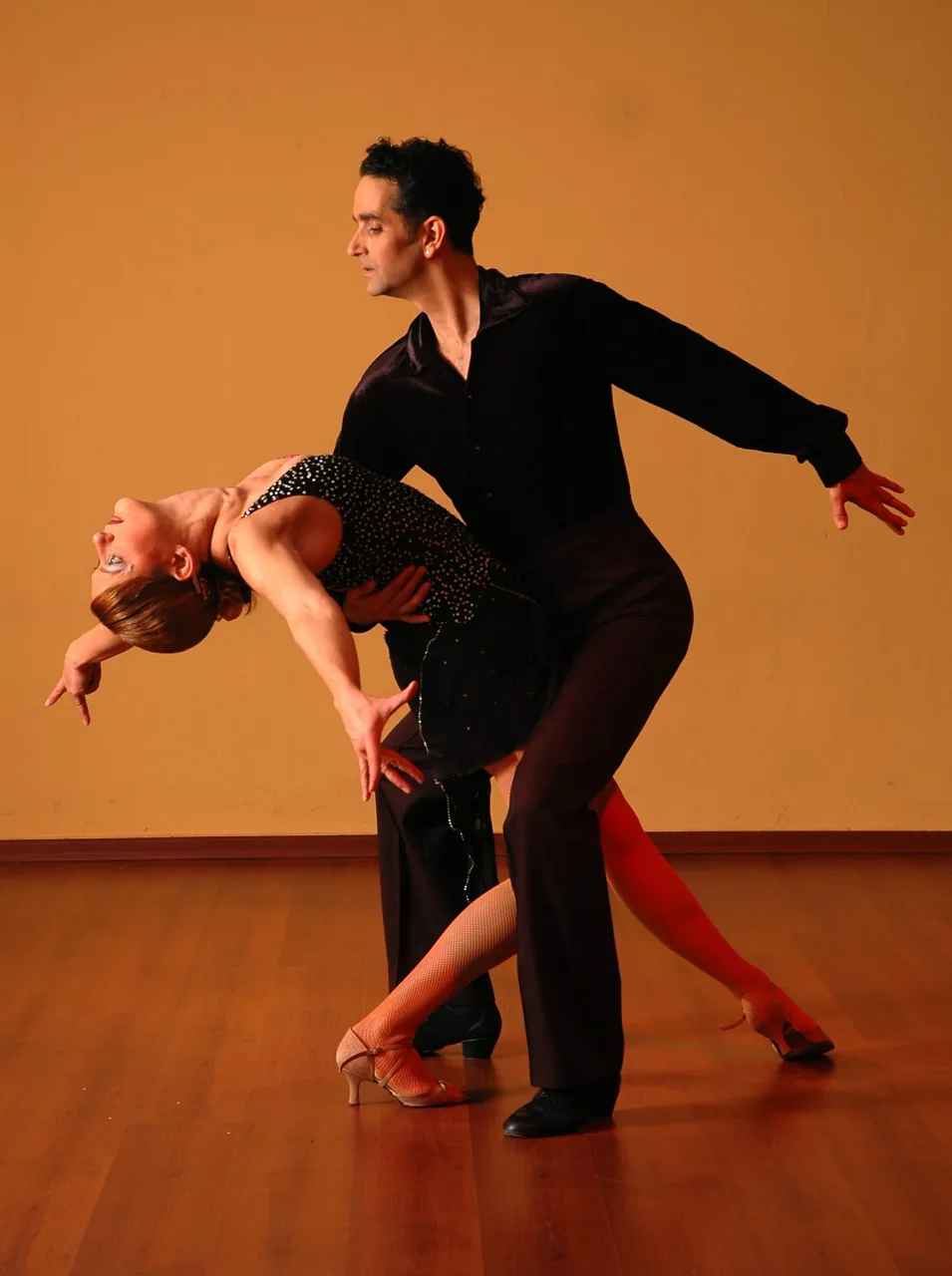
Salsa is often danced in a vacuum, as if it had no relatives, but it sits in a sprawling family of Afro-Cuban and Latin forms that share blood and rhythm. Meeting the relatives deepens your salsa as much as it broadens your dancing.
Start with the elders. Mambo is salsa's brash mid-century ancestor, born in the ballrooms where big bands turned Cuban rhythm into spectacle. Much of what feels dramatic in modern On2 dancing traces straight back to it — the shines, the sharp breaks, the theatrical hold.
Then there is rumba, which is really a whole world of its own, and cha-cha-cha, mambo's lighter, flirtier sibling that gave social dancers a slower on-ramp. Each shares the clave and the core Afro-Cuban vocabulary, but each solves the puzzle of moving to that rhythm a little differently, and dancing them back to back teaches you how flexible the underlying language is.
The cousins matter too. Bachata, from the Dominican Republic, brings a softer, hip-led sensibility that many salsa scenes now share a floor with. Kizomba, out of Angola and Portugal, teaches a close, grounded connection that quietly improves a salsa dancer's frame. None of these are salsa, but time in each pays back on the salsa floor.
You do not have to master the whole family to benefit from it. Even a handful of classes in a neighbouring style rewires how you hear and move, and sends you back to salsa with fresh ears. The tree is big, and every branch you climb makes the trunk feel sturdier.